AImpower.org 2025 Year In Review

Published on: September 6, 2026
(This post was published in the end of 2025 on our Substack newsletter, but I want to cross-posted here for achieve.)

Season’s greetings from all of us at AImpower.org!

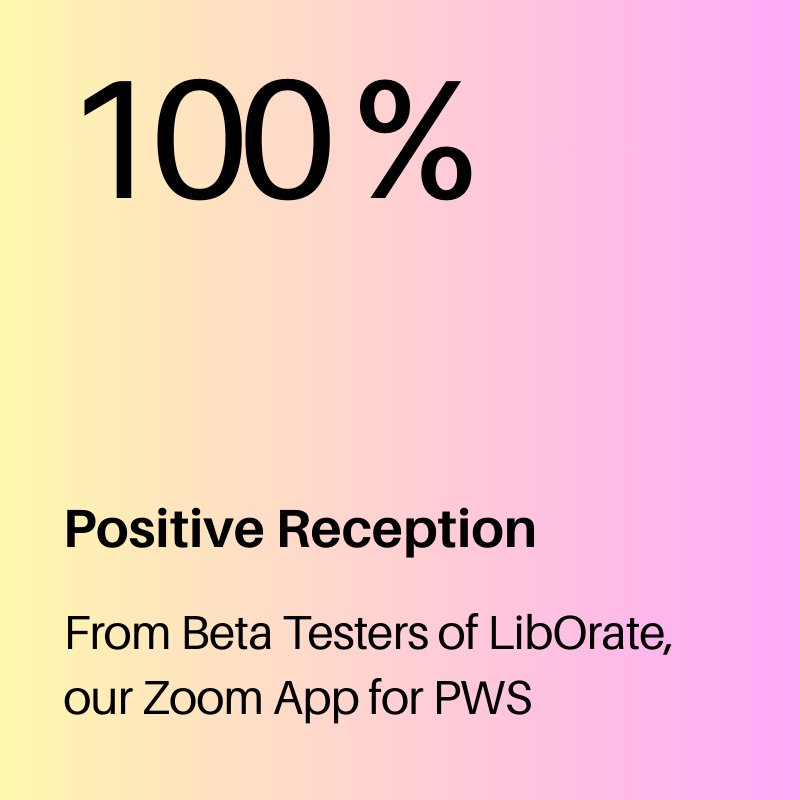
December was a busy and energizing month for our team. We published an ACM TechBriefs article examining the ethical impacts of automatic speech recognition (ASR); wrote two blog posts summarizing our research on stuttered speech data collection and governance; prepared for two upcoming academic workshops (InterSpeech, CHI) focused on inclusive speech AI; and wrapped up our month-long beta test for LibOrate — with overwhelmingly positive feedback from the stuttering community ❤️.


As we reflect on 2025, we see it as a year of execution and amplification. While doubling down our technical endeavor to make AI and videoconferencing more inclusive and empowering for people who stutter, we also strategically expanded our impact through capacity-building and partnerships. Working closely with the global stuttering community across the United States, Canada, the United Kingdom, China, and Japan, we shipped technical artifacts that catalyze change within the AI ecosystem and advocated for speech inclusivity across academic, technical, media, and philanthropy spaces — bringing more people into the movement everyday.

Still a young and small organization — with only two staff members and a dozen of contributors and volunteers — we are incredibly proud of what we achieved in 2025 with your support. Amid heightened external pressure and uncertainty, we are deeply grateful to our institutional funders, including the National Science Foundation, the Patrick J. McGovern Foundation, and Borealis Philanthropy. Above all, we want to thank our community, collaborators, and friends for supporting us with your data, ideas, and connections. We look forward to working even more closely with you — and hopefully meeting some of you in person — in 2026.

Here’s to joyful holidays and a 2026 filled with hopes and solidarity!

Warmly,

Shaomei @ AImpower.org

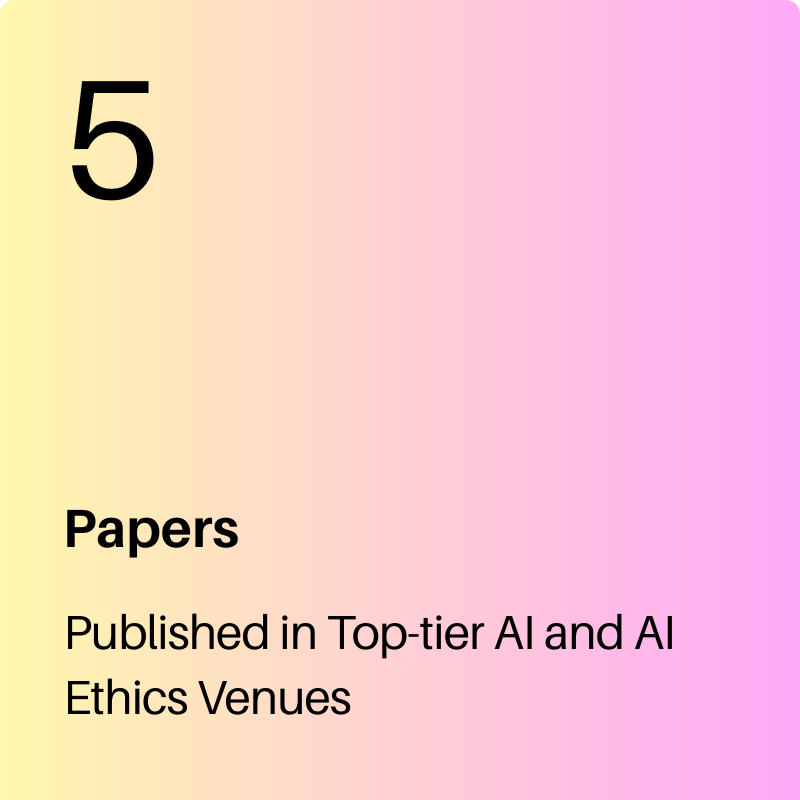
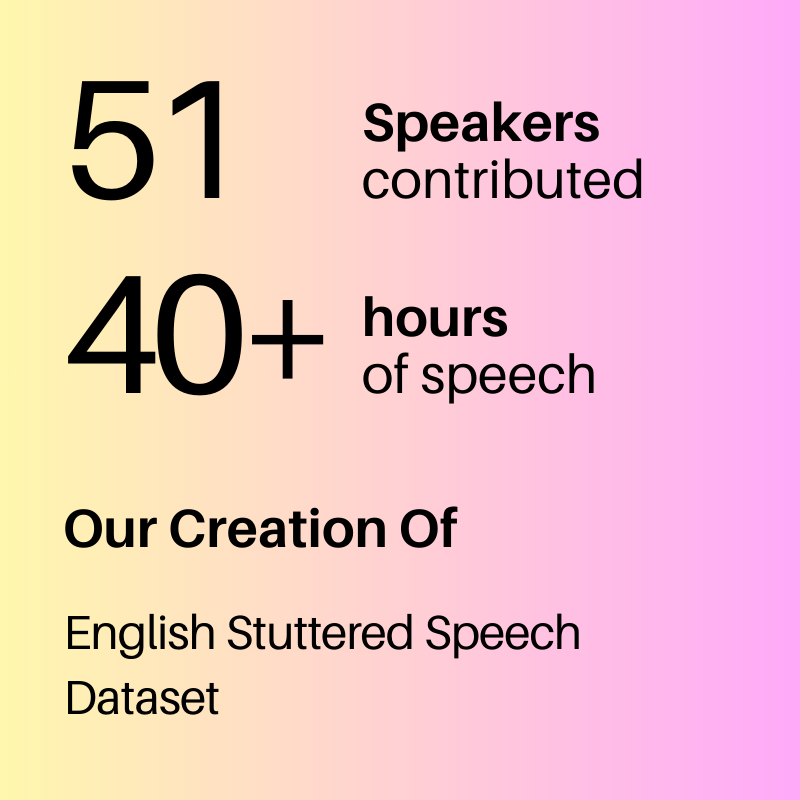
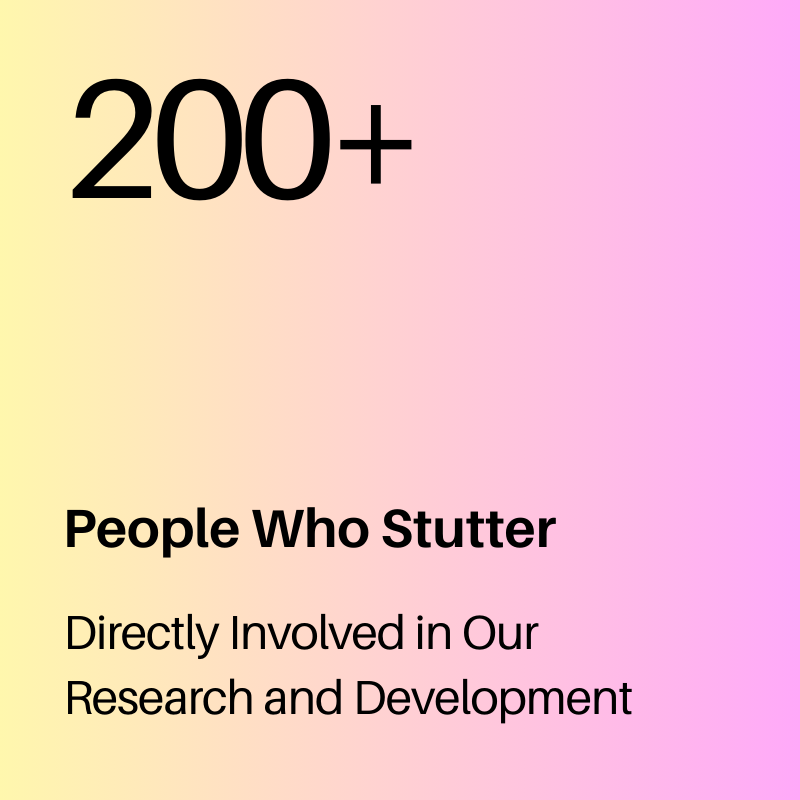
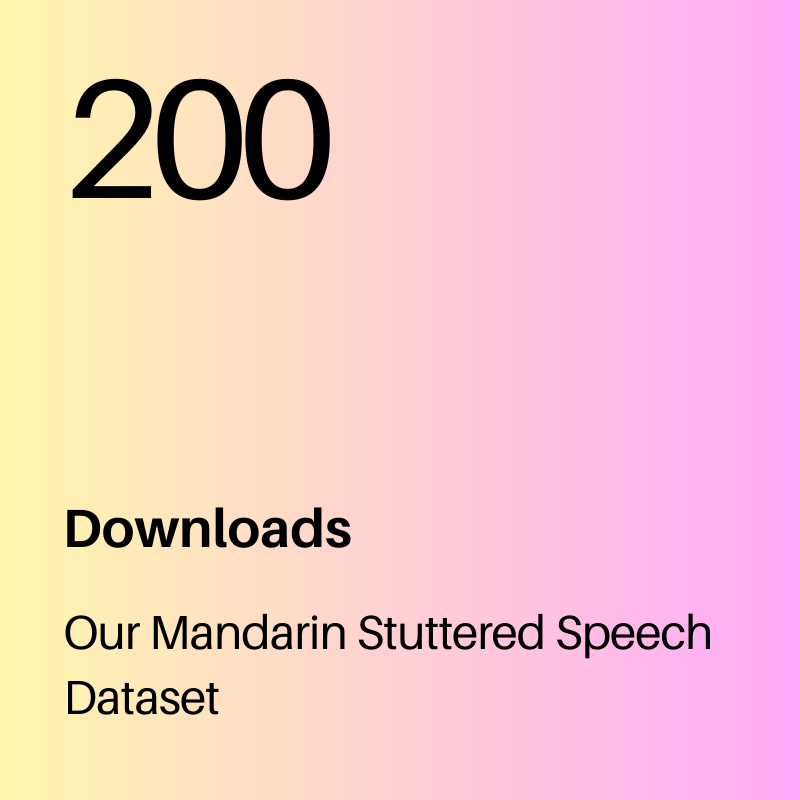
2025 In Review: By The Numbers

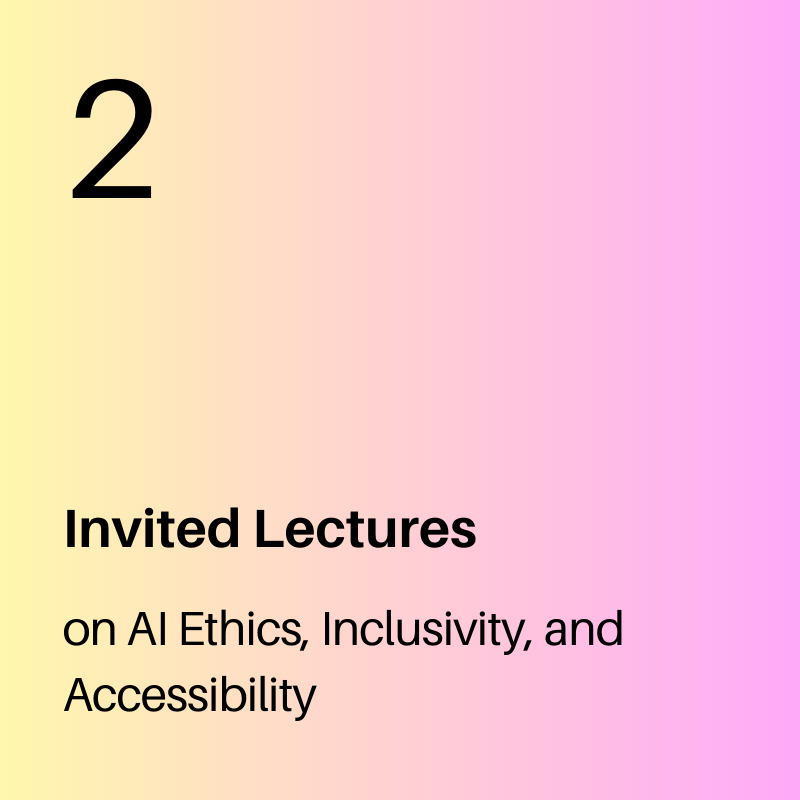
Here are a few numbers that reflect our technical outputs, community mobilization, and public advocacy efforts in 2025.

Highlights From AImpower.org in 2025

1. Building a cross-sector, cross-country coalition to amplify marginalized voices in tech

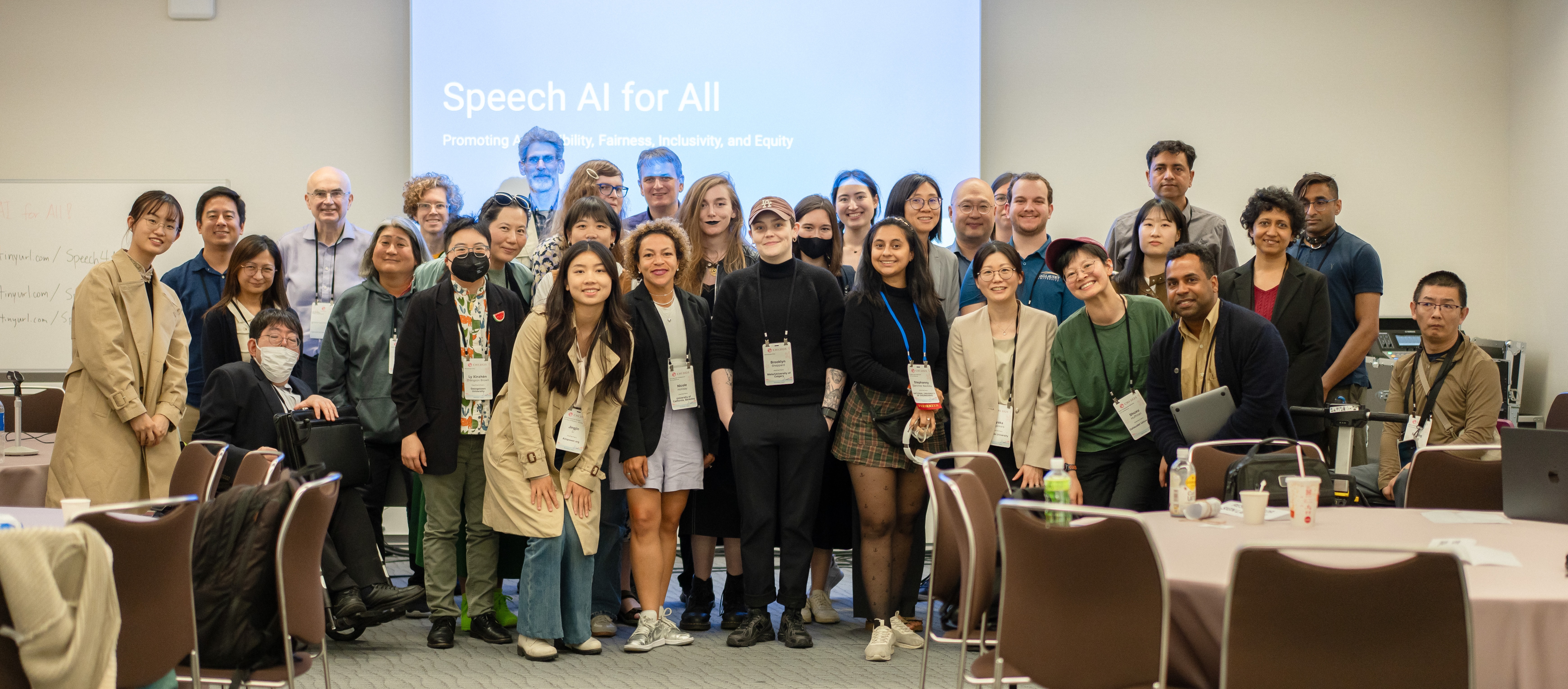
We do not change the world alone. 2025 taught us the importance of solidarity,  partnership, and collaboration. We successfully hosted the very first "Speech AI for All" workshop at CHI 2025, with a great turn-out of cross-sector participants from industry, academic, and community organizations. We had also formed a working group and would continue organizing other events, activities, and collaborations with this amazing group of people who shared our vision and goals to build "speech AI for all"! 

Speech AI for All workshop @ CHI 2025
project detail
Over 30 academic and industry researchers from 8 countries attended our Speech AI for All workshop at ACM CHI conference at Yokohama, Japan
Collaboration with Patrick J McGovern Foundation
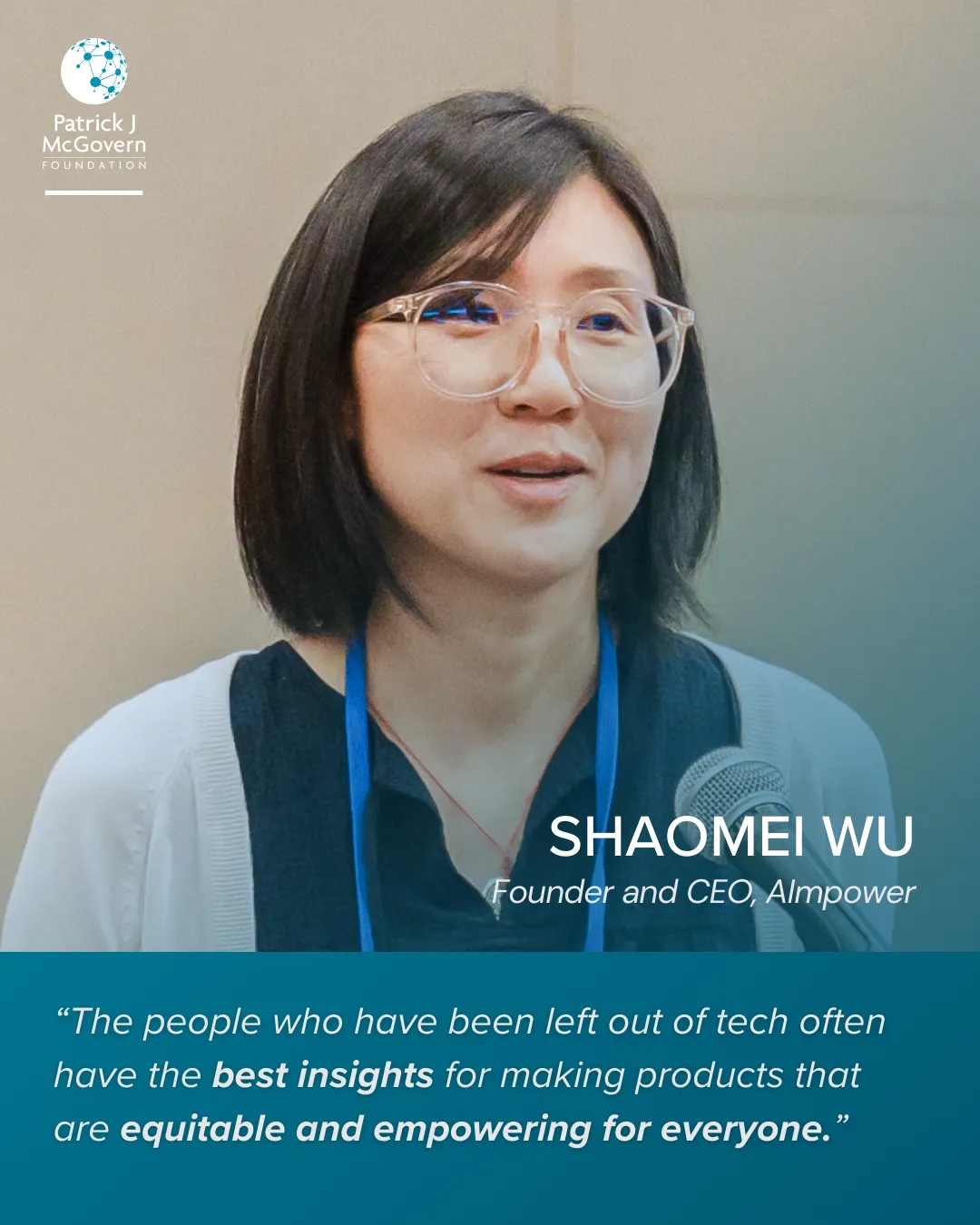
Shaomei, quoted by Patrick J McGovern Foundation who funded our work on inclusive ASR for people who stutter
Partnership with Speech Accessibility Project
Sync Storage
The announcement of our partnership with UIUC’s Speech Accessibility Project to collect more stuttered speech data for inclusive speech AI
2. Working directly with hundreds of people who stutter to advocate for and build inclusive communication environments for all

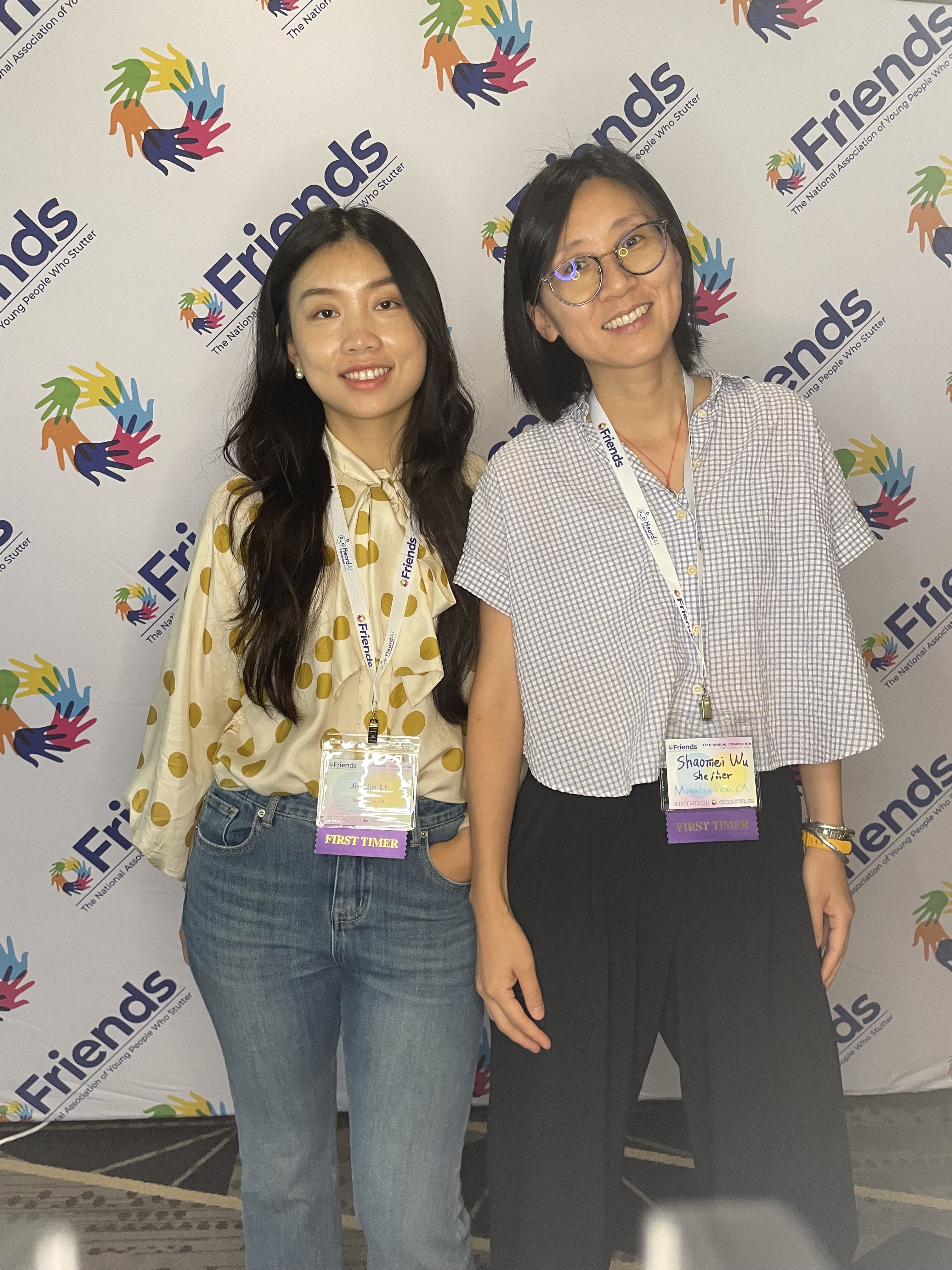
We are proud of being part of, and working closely with, the stuttering community. We continued our commitment to stuttering awareness and advocacy in 2024, and had lots of fun and inspiring conversations with our old or new friends who stutter at National Stuttering Association's annual conference at Denver, as well as the Friends conference at Charlotte.

Stuttering Advocacy
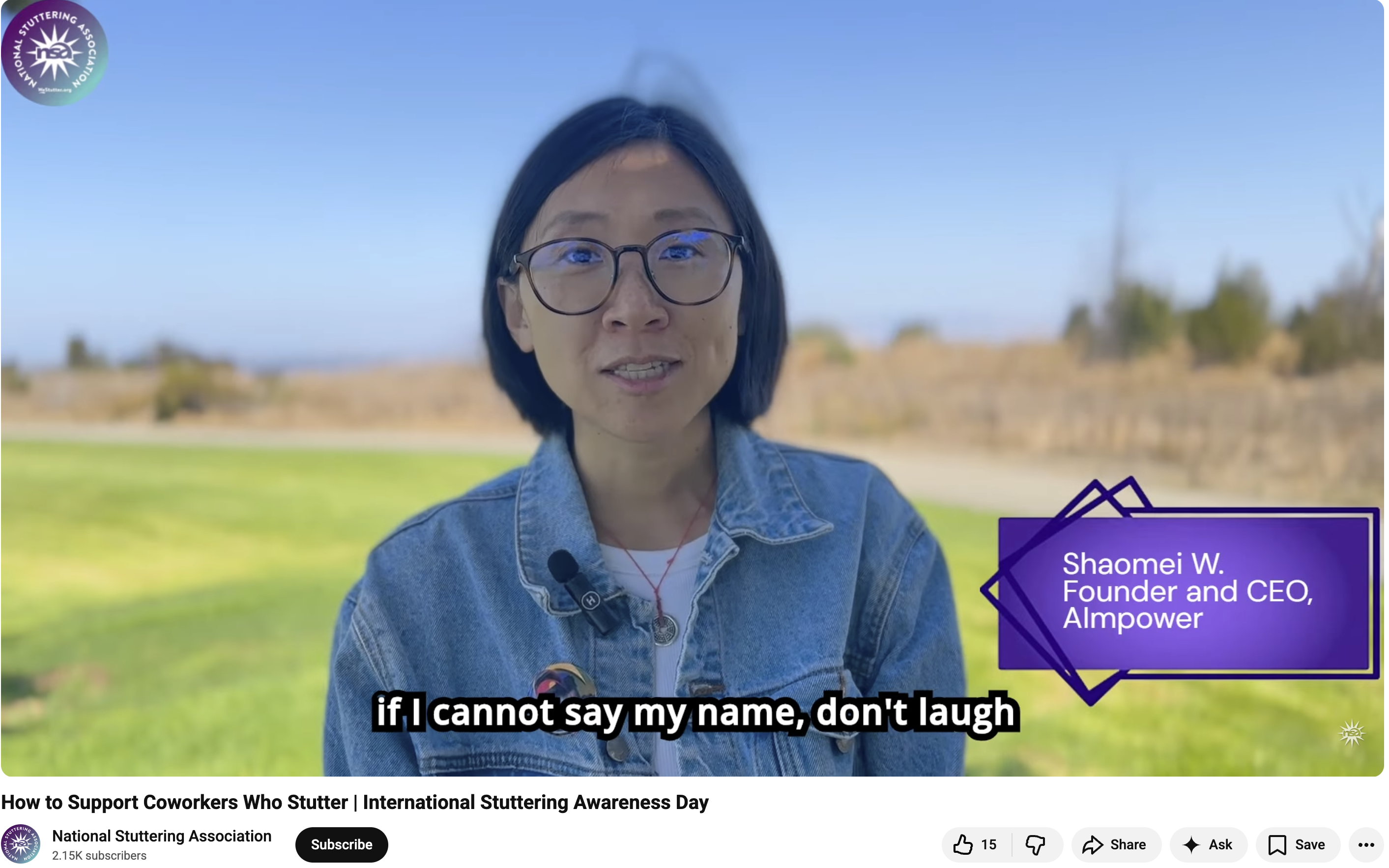
Shaomei in NSA’s International Stuttering Awareness Day advocacy video
Community events
Sync Storage
Shaomei and Jingjin at the Friends (the National Association for Young People Who Stutter) Conference in Charlotte, SC
3. Producing high quality scientific research on inclusive speech AI

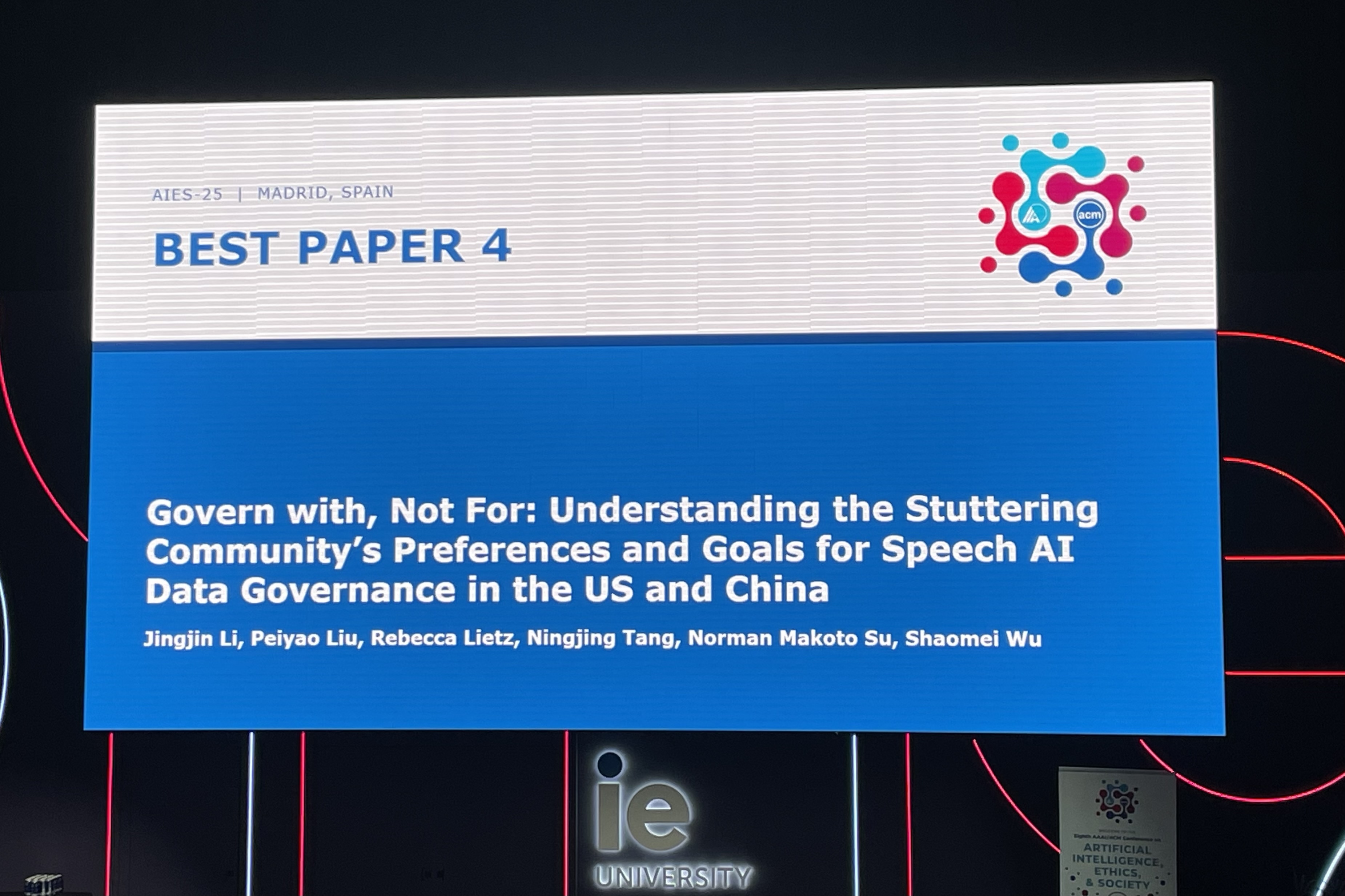
We published six papers at top conferences such as CHI, FAccT, AIES, InterSpeech, and ACL in 2025, all thanks to the great team of our staff, volunteers, collaborators, and partners. One of our papers won the best paper award at the AAAI/ACM Conference on Artificial Intelligence, Ethics, and Society (AIES '25)!

Here are our academic publications in 2025:

AIES 2025 Best Paper Award
Our work on community-led stuttered speech governance model has won the Best Paper award at the AIES (AI, Ethics, and Society) conference in Madrid, Spain
4. Driving policy conversations around Automatic Speech Recognition technology

To drive real changes in speech technology for people with speech diversities, we started working with leading academic researchers in this field to publish scientific statistic and briefings for policy makers, and learned a great deal during this process.

ACM Tech Brief on Automatic Speech Recognition Technology
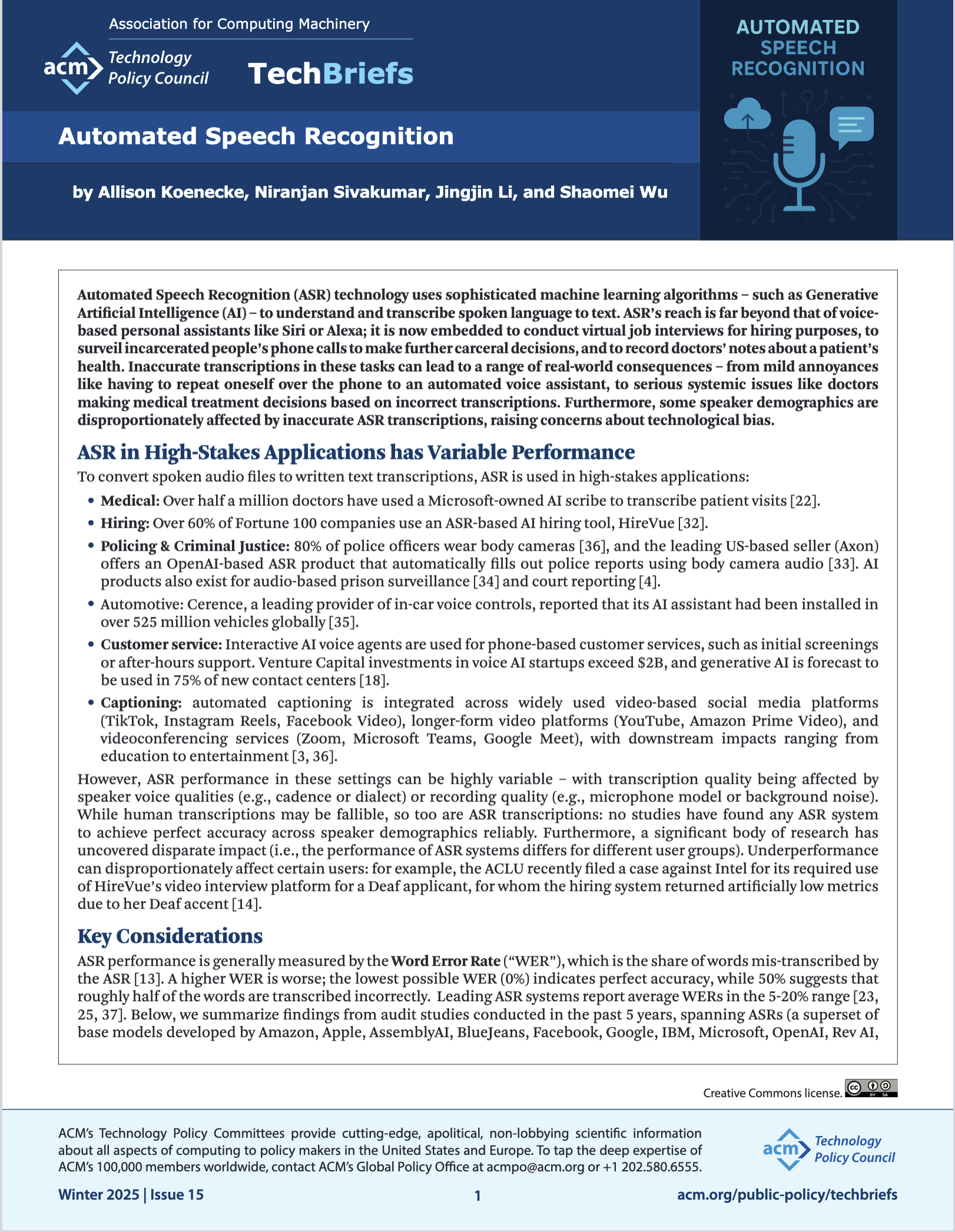
ACM Tech Brief on ASR ethical considerations and solutions, co-authored by AImpower.org and Allison Koenecke from Cornell University
5. Delivering multiple tangible technical products to support and benefit people who stutter in technology-mediated communications

We beta launched our Zoom companion app, LibOrate, in late 2025, with a warm reception from community beta testers. Our ASR related outputs - the stuttered speech dataset and the ASR model fine-tuned with stuttered speech - continued more and more attention and had been downloaded hundreds of times in 2025!

LibOrate - Zoom companion app for people who stutter
Screenshot of LibOrate app that allows the users to display a customized name tag such as "I am a person who stutters" to disclose one's communication needs.
Stuttering-friendly Open ASR model
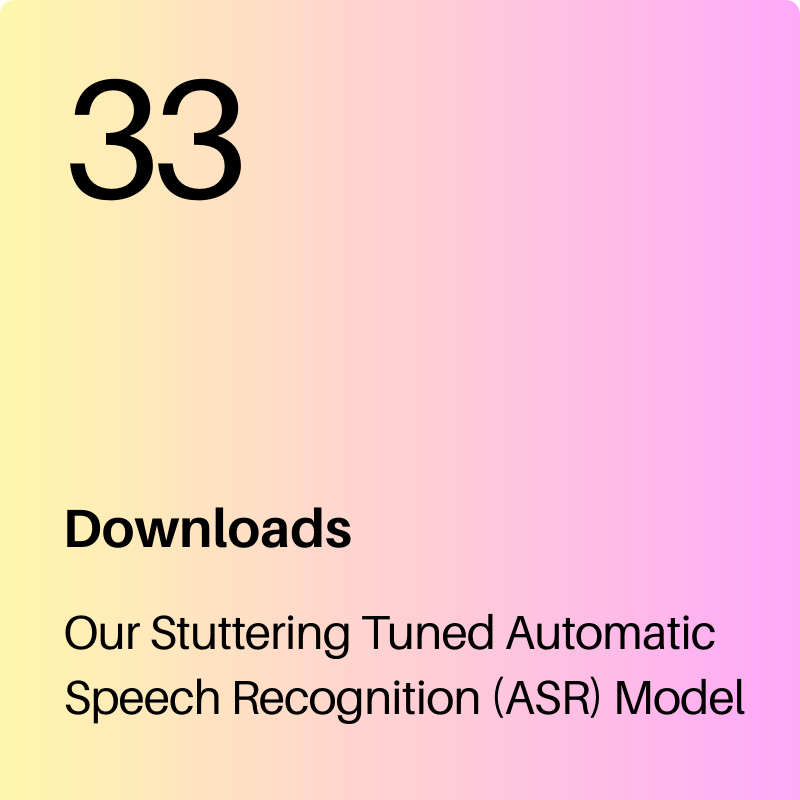
Our Stuttered Speech ASR model has been downloaded 34 times since its release on HuggingFace in Oct 2025
Mandarin Stuttered Speech Dataset
The Mandarin Stuttered Speech (StammerTalk) dataset has been downloaded more than 200 times since its release on HuggingFace in June

Looking Ahead to 2026

We have exciting plans for 2026 ✨. We will continue building bridges by organizing academic workshops and presenting at major stuttering community conferences in the U.S. and abroad. We are launching a new research collaboration with Chris Constantino and the University of Tsukuba in Japan, publicly releasing LibOrate on the Zoom Marketplace, and publishing our English Stuttered Speech Dataset alongside an upgraded inclusive ASR model trained on this data.

Together, we’re building a global movement to transform speech technology and ensure every voice is heard. Join us!

✕

Shaomei Wu

Shaomei was a staff research scientist and engineer at Facebook AI and Instagram, leading large cross-org teams on “tech for good” initiatives and products, including Accessibility, AI for Inclusion, and Instagram Equity. She received her PhD at Cornell University studying viralness and collective behaviors in large social networks. As a person of color, an immigrant, a woman in tech, as well as a person who stutters, Shaomei has experienced intersectionality and marginalizations first-hand, and is committed to leverage her technical expertise and lived experiences to create a new paradigm of technologies that is truly equitable and empowering for all.

✕

Niranjan Sivakumar

Drawing on his extensive experience advising a number of high growth technology companies as well as teaching and researching at a number of academic institutions in the US, EU and UK, Niranjan brings a background investigating the intersection of law, society and technology to AImpower.

✕

Ran brings her deep expertise in research, data science, and product development to drive AImpower’s research and technical program.


Prior to AImpower, Ran was a research manager at Meta, leading data science and UX research teams to shape business and product strategies. With an educational background in statistics and psychology, Ran’s experiences spanned over NGOs and the tech industry, from evaluating international development programs to building user-centered technology products.

✕

Kaiton Williams

Kaiton is a Silicon Valley engineer turned Human-Computer Interaction researcher. He oversees investments at Impact America Fund with a particular interest in the challenges of connecting community-oriented research and design with scalable technology production and investment. Previously, Kaiton held senior engineering and architecture roles at Microsoft for over a decade, where he helped build and manage early web applications for billions of users. He then went on to earn his Ph.D. in Information Science from Cornell University, where his ethnographic research focused on the experiences of tech entrepreneurs building products for and from communities outside of Silicon Valley’s “normal.”

✕

Salmana Ahmed

Salmana is a Principal on Global Programmes team at Luminate, leading Luminate’s work in Africa, Asia, and Latin America. She previously grew and supported the foundation’s Data & Digital Rights portfolio. Prior to joining Luminate, Salmana was a Senior Programme Manager at the Mo Ibrahim Foundation where she helped develop the strategy for the Ibrahim Forum and co-managed the production of the Ibrahim Index of African Governance and Forum reports. She previously served as a Consultant at the Open Data Institute, as an editorial assistant at Royal United Services Institute, and as Deputy Project Manager at the Centre for Religion and Geopolitics.

✕

Ben Lickly

Ben brings a background in technology, organizing, and academia, and is currently both a practicing software engineer and union steward.  Previously, Ben received his Ph.D in EECS from UC Berkeley.

✕

Qisheng Li

Qisheng’s research interests span human-computer interaction, accessibility, and AI/ML. She is a visiting research scientist at Meta Reality Lab. Previously, Qisheng spent a year at Apple as an AI/ML resident working on non-visual AR applications for blind/low-vision users, after receiving her Ph.D. in Computer Science & Engineering from the University of Washington in 2022 studying volunteer-based online experimentations with people with disabilities.

✕

Jingjin Li

Jingjin is interested in applying human-centered research and design methods to create technological innovations that promote mindfulness and well-being. At AImpower, she is passionate about applying her research background to incorporate mindfulness into technology design and empower individuals psychologically and behaviorally.

Jingjin received her Ph.D. degree in Information Science from Cornell University.

✕

Mike Meaney

Mike Meaney is a research and product leader with over a decade of experience building inclusive technologies. He began his career as a middle school science teacher and has since worked in R&D and Product Management at Multiverse, Facebook, and Arizona State University. Through AImpower, he is conducting research and development to build a new company focused on serving communities underserved by traditional tech. 

Mike holds a Ph.D. from the University of Cambridge, where he was a Gates Cambridge Scholar and a Visiting Research Fellow at the Brookings Institution.

Mike Meaney has stuttered all his life and has been actively involved in the addiction recovery community for more than a decade. 

✕

Greg Price

Greg is a software engineer graduate from the University of Ottawa and currently pursuing an MCS in artificial intelligence. He has a background in natural language models through governmental work. He brings his passion for continuous learning and development to AImpower by researching intersectionalities in popular software services.

✕

Huynh Yen Nhi Tran

Nhi, a graduate student specializing in Human-Computer Interaction at the University of California, Santa Cruz, holds a Bachelor of Fine Arts in Digital Media Art. With prior experience as a Website and Graphic Designer at a creative agency, she has consistently focused on developing user-centric products aimed at reducing cognitive load. While her background primarily lies in visual design, she is actively broadening her expertise to include UX Research and Design within the healthcare sector.

✕

Adedotun Bello

Adedotun is an incoming medical student who graduated from the University of Pennsylvania in May of 2023 with a Bachelor of Arts in Neuroscience. He currently works as a research specialist at a lab investigating traumatic brain injury, tissue engineering, and nerve regeneration.

As a person who stutters, Adedotun is deeply interested in stuttering advocacy and leveraging technology to improve the daily lives of other people who stutter.

✕

Charan Sridhar

Charan is interested in using Computer Science and AI to improve the quality of life of and achieve equity for marginalized communities. At AImpower, he is working on equity in speech-to-text systems. Previously, he worked on AI research projects that aimed to increase the accessibility of healthcare, improve medical diagnosis accuracy, and evaluate the steganographic capabilities of ML models.

As a person who stutters, Charan feels a deep connection to AImpower’s mission for equitable technology. He is currently a junior at BASIS Independent Silicon Valley.

✕

Aishwarya Pai

Aishwarya graduated from Santa Clara University with an MS in Computer Science and Engineering, concentrating in Machine Learning, in 2022. She also obtained her BS in Computer Science, with a Data Science emphasis, from SCU, within three years and with honors. Her previous experience includes working with LLMs in the Generative AI space, as well as conducting and surveying research on foundation models for program synthesis and similar NLP tasks. Personally, Aishwarya is excited to be a part of the AImpower team: Having the opportunity to create momentous impact for individuals who may have been discriminated against, due to the ever-changing AI landscape, is a dream-come-true for her. 

✕

Meredith Ringel Morris

Meredith Ringel Morris is a Principal Scientist with Google Brain, conducting research on human-computer interaction and human-centered AI. Previously, she was the Director of People + AI Research for Google’s Responsible AI organization. Prior to joining Google Research, she was the Research Area Manager for Interaction, Accessibility, and Mixed Reality at Microsoft Research, where she also founded the Ability research group. Dr. Morris is also an Affiliate Professor in the Paul G. Allen School of Computer Science & Engineering and in The Information School at the University of Washington. She is an ACM Fellow and a member of the ACM SIGCHI Academy. Dr. Morris earned her Ph.D. in computer science at Stanford University and her Sc.B. in computer science at Brown University.

✕

Gilly Leshed

Gilly is a Senior Lecturer in the Department of Information Science at Cornell University. She teaches human-computer interaction and qualitative research methods, and directs the Master of Professional Studies program in Information Science. Through research and design, she examines how individuals and groups achieve their goals and socialize, and the roles that technologies play in these interactions. She advocates for technology designs that respond to human needs responsibly and ethically. She received her PhD in Information Science from Cornell.

✕

Yu-Ru Lin

Yu-Ru Lin an associate professor at School of Computing and Information, University of Pittsburgh. She is interested in studying social and political networks, as well as computational and visualization methods for understanding network data. Her work has focused on large-scale community dynamics, high-dimensional (rich-context) social information summarization and representation. Yu-Ru leads the PITT Computational Social Dynamics Lab (PICSO LAB). Her most recent research and services interrogate structural inequalities and systematic oppression of marginalized groups in different social context.

✕

Channarong Intahchomphoo

ชาญณรงค์ อินต๊ะชมภู

Channarong Intahchomphoo is an Adjunct Professor in the School of Engineering Design and Teaching Innovation, Faculty of Engineering, University of Ottawa, Canada. He teaches in the Ethics of Artificial Intelligence course, and studies the experiences and impact of technologies on marginalized and vulnerable groups such as indigenous youth in Canada and undocumented female migrant workers in Thailand.

✕

Double Your Impact

Many employers match donations — so your gift to AImpower could go twice as far, at no extra cost to you.

Check if your employer matches through:

✕

Ting-an Lin

Ting-an is an AI ethics researcher, socio-political and feminist philosopher, and community builder dedicated to aligning sociotechnical systems with democratic values and structural justice. Combining scholarly rigor with deep care for humanity, she collaborates across disciplines to conceptualize and shape alternative sociotechnical orders where everyone, especially the marginalized, can thrive.

Previously, she was a tenure-track faculty member at the University of Connecticut (UConn) and held an interdisciplinary fellowship across the Stanford Institute for Human-centered AI (HAI) and the McCoy Family Center for Ethics in Society. She received her PhD in Philosophy from Rutgers University.

✕

Xinru Tang

Xinru is a researcher working at the intersection of HCI, accessibility and responsible AI. She has extensive experience working with people across disabilities and scholars across disciplines. At AImpower, she is committed to centering communities’ lived experiences in the design and development of truly human-centered AI and emerging technologies. She is expected to receive her PhD in Informatics from University of California, Irvine.

✕